Anton Krutz
Entrepreneur | Luthier | Mind Model Maven
Force Warp Unit
The U.S. Navy has two patents that claim antigravity-like capabilities. US10144532B2 is a patent titled “Craft using an inertial mass reduction device,” and US10322827B2 is titled “High frequency gravitational wave generator.” While US10144532B2 focuses on direct inertial mass reduction for a craft’s effortless
high-speed movement and maneuverability, US10322827B2 complements this by producing controllable high-frequency gravitational waves that can similarly distort spacetime, reduce mass, and provide advanced field propulsion or other disruptive effects. Both patents have same underlying mechanism: intense,
dynamically oscillating, deliberate asymmetric, electromagnetic fields.
These U.S. Navy patents align with the provisional patent for the Force Warp Unit (FWU) outlined below. All three generate highly dynamic, time-varying electromagnetic fields that pulsate, oscillate, and migrate continuously rather than remaining static or uniform. But the FWU is a much simpler design and can be built using commercially available parts. Consequently, the FWU is serious and compelling candidate for any laboratory to construct and experimentally test.
Furthermore, the FWU is based on the Unified Field Theory (UFT) of spacetime, which represents a fundamentally different model of physics. ( A summary of the UFT spacetime model and how UAPs use it is available at AntonKrutz.com/antigravity along with the complete UFT at AntonKrutz.com/uft ) The breakthrough framework of the UFT is significant because mainstream physics currently cannot explain how certain electromagnetic fields interact with gravity. String theory, the leading alternative framework, also fails to address the effect of electromagnetism on gravity and can’t even produce an experimentally confirmed prediction. In stark contrast, the UFT can be empirically validated directly through the performance of the FWU.
For an observable test, the FWU can be suspended from a non-magnetic wire attached to a high-precision analytical balance or load cell. This arrangement permits accurate, real-time measurement of any reduction in the FWU weight when power is applied. A measurable decrease would validate the UFT model.
FORCE WARP UNIT - PROVISIONAL PATENT APPLICATION 64/117,318
Title of the Invention
Apparatus For Generating A Dynamic Migrating Asymmetric Field Using An Array Of Modulated Cylinder Electromagnets.
Inventor
Anton Krutz
Cross-Reference to Related Applications None.
Field of the Invention
The present invention relates generally to electromagnetic devices and, more particularly, to an apparatus and method for generating a highly dynamic, chaotic, and continuously migrating three-dimensional magnetic flux field through the controlled interaction of multiple asymmetrically driven cylinder electromagnets arranged in an array. In one embodiment, the apparatus comprises three cylinder electromagnets arranged in an equilateral triangle pattern with a defined edge-toedge spacing.
Background of the Invention
Conventional static or synchronously driven electromagnets produce predictable, stationary, or periodically repeating magnetic fields that lack the complex, nonrepeating spatial and temporal dynamics required for certain research, visualization, and industrial applications. There exists a need for a compact, scalable, and readily reproducible system capable of generating a rich, continuously evolving “wobble” in the composite magnetic flux field using only commercially available components.
Summary of the Invention
The invention, hereinafter will be referred to as the Force Warp Unit (FWU), comprises a framework that generates an extremely dynamic chaotic and continuously migrating magnetic flux field the wobble by driving three identical Cylinder Electromagnets (CEs) with deliberate temporal amplitude spatial and frequency asymmetries. The system uses low loss carbonyl iron powder cores with effective relative permeability of approximately 26 Micrometals.
The CEs are positioned with an edge-to-edge spacing of 1/8 inch between the outer edges of their windings. This tight spacing produces rich, non-repeating, threedimensional interference patterns in the composite magnetic field. The poles of the CEs are oriented such that like poles face the same direction on each corresponding face, ensuring continuous mutual repulsion between the CEs. The resulting composite magnetic field exhibits lively, breathing, migrating, and twisting behavior that is readily visualized using ferrofluid or iron filings. The design is electrically straightforward, thermally manageable, and fully scalable. When pickup coils are placed above the poles of the CEs, this apparatus produces dramatically stronger induced currents in those coils than any other configuration using the same current and components.
An ESP32 microcontroller generates three independent PWM channels with precise initial phase offsets and a superimposed low-frequency amplitude envelope. Three high-current MOSFET driver modules powered by a single adjustable DC power supply drive the electromagnets. All control power switching and modulation functions are performed by commercially available electronics.
Brief Description of the Drawings
Applicant reserves the right to file drawings in any non-provisional application claiming benefit hereof.
FIG. 1 is a top plan view of the array of three cylinder electromagnets showing the equilateral triangle spacing.
FIG. 2 is an auxiliary view of the array of three cylinder electromagnets showing the equilateral triangle spacing.
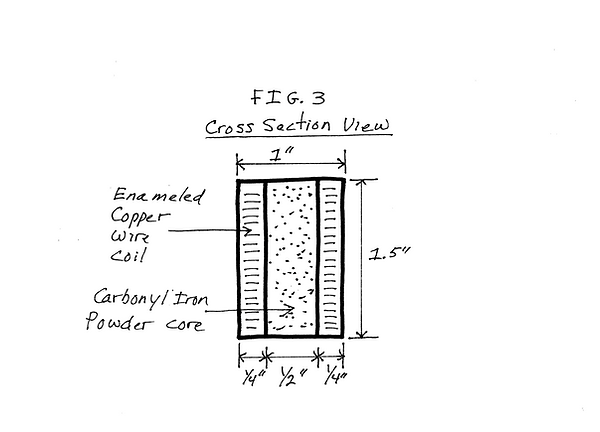
FIG. 3 is a cross-sectional view of an individual cylinder electromagnet.
Detailed Description of the Invention
Hardware Configuration
The FWU comprises three identical cylinder electromagnets CEs. Each CE has a 1 inch outside diameter pole, a 1/2 inch outside diameter carbonyl iron powder core, and a core height of 1.5 inches, with effective relative permeability (Micrometals - 26 material recommended; cores may be purchased pre-formed or fabricated by compacting the insulated carbonyl iron powder in a cylindrical die under high pressure to the specified dimensions) - formed by compaction of electrically insulated microscopic iron particles – 1/4 inch windings of thick copper coil wound with 18-22 wire gauge enameled magnet wire around the core. Each coil consists of approximately three hundred fifty to four hundred fifty turns of magnet wire resulting in a direct current resistance of approximately 0.8 – 1.5 ohms and an inductance of approximately 1.5 - 3 millihenries when mounted on the carbonyl iron powder core. Each completed CE has an overall outside diameter of approximately 1 inch.
The carbonyl iron powder core is selected because its insulated microscopic iron particles provide extremely high electrical resistivity that virtually eliminates eddy current heating at four hundred hertz allowing fully passive cooling with no external fans required while the moderate permeability multiplies the varying B field strength. The core height of 1.5 inches optimizes the amp turns and axial field strength delivering the ideal flux.
All three CEs are oriented with the same magnetic pole facing upward toward a common interaction volume above the array. The CEs are fixed in an equilateral triangle pattern with a preferred edge to edge spacing of 1/8 inch between cylinders. The precise spacing can be maintained by a non-magnetic threedimensional 3D printed fixture or specially formed spacers.
Drive and Sequencing Strategy
Power levels are intentionally staggered to introduce spatial asymmetry. CE-1 is at 30% of maximum current, creating a weak flux perturbation CE-2 is at 60% of maximum current, creating a semi-strong flux perturbation.
CE-3 is at 100% of maximum current, creating a very strong flux perturbation. (These percentages are implemented by setting the corresponding PWM duty cycles, approximately 30 %, 60 %, and 100 % respectively, and verified by measuring the actual DC current draw of each channel with a multimeter.)
Pulse frequencies are detuned around a nominal 400Hz carrier to induce beat chaos CE-1 at 380 Hz
CE-2 at 400 Hz
CE-3 at 420 Hz
The three CEs operate continuously and asynchronously at their respective fixed frequencies. The ESP32-WROOM-32 development board generates the PWM signals for all three CEs and imposes precise initial phase offsets. Specifically, the rising edge of CE-2 is delayed by approximately 0.20 to 0.33 milliseconds relative to CE-1, and the rising edge of CE-3 is delayed by approximately 0.40 to 0.66 milliseconds relative to CE-1. These initial phase offsets are deliberately chosen to equal 0.5 to 1 times the time constant of the carbonyl iron powder cores. After this initial stagger, the CEs free run independently. The resulting beat frequencies of 20 Hz to 40 Hz cause the relative phases to drift continuously and in a non-repeating manner.
Pulsing Method
Rapid DC on/off switching is accomplished by three independent high-current PWM MOSFET driver modules rated at 15 to 30 amperes. (For example, IRF540 or AOD4184-based MOSFET driver modules from Amazon or Pololu). These modules should include flyback diode protection (built-in or external), such as a 1N5822 Schottky diode or UF4007 ultrafast diode.
The carbonyl iron powder cores enable low-loss operation at the PWM frequencies used. They smoothly convert the sharp on/off edges of the PWM waveform into continuous, overlapping current ramps. This eliminates the excessive heating that would otherwise occur with solid ferromagnetic cores and produces the desired twisting interference patterns in the composite magnetic field.
Physics Principles
The maximum wobble in the composite magnetic flux field arises from the synergistic interaction of four key design features:
Low eddy current losses in the carbonyl iron powder cores. The insulated microscopic iron particles greatly reduce energy loss and heating. This still permits sufficient temporal smearing of the staggered PWM on/off events into smooth, continuous overlapping current ramps while enabling fully passive cooling at 400 Hz with no external fans required.
Staggered drive amplitudes combined with frequency detuning. Driving the three CEs at deliberately different power levels and slightly detuned frequencies around the nominal 400 Hz carrier generates continuously drifting phase relationships between the electromagnets. These drifting phases produce traveling intensity waves in the magnetic field.
Tight one-eighth inch (3.175 mm) edge-to-edge repulsive spacing. This close spacing maximizes constructive overlap and peak composite B-field strength in the overhead interaction volume, while still permitting strong lateral flux migration and preserving high axial B-field strength directly under each pole.
The optional superimposed low-frequency amplitude envelope. A common 12 Hz envelope with 30 % depth is applied simultaneously to all three channels. This causes the entire composite flux field to visibly “breathe” while greatly amplifying the migrating and twisting behavior.
Together, these four features produce the lively, chaotic, and continuously evolving three-dimensional magnetic flux field that defines the invention.
Comparative Configurations Demonstrating the Role of a Dynamic Flux Wobble
In addition to the primary FWU, let’s use two comparative configurations using identical CEs as examples to show the significant contribution of the dynamic flux wobble to induce current.
Configuration-One spaces the three CEs 1 inch edge-to-edge apart so that their individual magnetic fields do not meaningfully interact. This configuration still applies the full standard FWU modulation, including staggered power levels, detuned frequencies, precise phase offsets.
Configuration-Two retains the standard one-eighth inch (3.175 mm) equilateral triangle layout but drives all three CEs at a constant average power level, with no power staggering, no frequency detuning, no phase offsets.
If overhead pickup coils are placed on the poles of all the CEs in the primary FWU and the two configurations, then the induced current (relative to the standard FWU) would be:
Configuration-One (spaced apart with full modulation): approximately 65% - 75% lower.
Configuration-Two (close spacing with constant power): approximately 35% - 45% lower.
These comparisons show that both the tight gap repulsive spacing and the dynamic modulation of the standard FWU have a principal force-multiplier effect on induced current.
Distinguishing Features Over Conventional and Alternative Electromagnetic Frameworks
The present invention produces its extremely dynamic, chaotic, and continuously migrating magnetic flux field (the “wobble”) through a unique combination of features absent from all previously known electromagnetic systems.
Conventional electromagnets that use solid ferromagnetic iron or ferrite cores are limited by magnetic saturation, hysteresis, and very high relative permeability. These effects channel and stabilize flux lines, suppress lateral migration, and cause excessive heating at 400 Hz.
In contrast, the carbonyl iron powder cores used in this invention have moderate relative permeability that amplifies the varying B-field, producing dramatically stronger induced currents in overhead pickup coils. Their insulated microscopic particles virtually eliminate eddy-current losses, enabling fully passive cooling while preserving the controlled temporal smearing needed for the 20–40 Hz beatinduced phase drift that are central to the invention, as well as the additional 12 Hz breathing envelope.
Alternative multi-electromagnet systems typically rely on symmetric drive conditions (identical current amplitudes, synchronized frequencies, and zero or arbitrary phase relationships), ferromagnetic cores, different geometries (linear or widely spaced arrays), continuous AC excitation without deliberate detuning. These configurations lack the deliberate temporal, amplitude, spatial, and frequency asymmetries combined with carbonyl iron powder cores and the precise one-eighth-inch edge-to-edge spacing that produce the controlled low-loss operation, drifting phases, and breathing behavior of the present invention.
Scope of the Invention and Coverage of Equivalents
The present invention is not limited to the exact numerical values or dimensions recited in the exemplary embodiment. It encompasses the full range of equivalents and insubstantial modifications that perform substantially the same function in substantially the same way to achieve substantially the same result. Therefore, any product apparatus or method that employs three cylinder electromagnets arranged in the claimed equilateral triangle pattern with like poles facing upward, carbonyl iron powder cores or equivalent powder cores and deliberate asymmetries in power level is expressly intended to fall within the scope of this invention.
The proposed sizes and power inputs in this invention serve as the starting point so the invention can be built and understood as a working framework. Those specific sizes and power inputs are only relevant to illustrate the framework at that scale. This framework, along with the DC power used, can be scaled in size and will still work. It would just be more powerful.
Minor variations such as raising or lowering the carrier frequencies, changing cylinder length or diameter, adjusting the envelope frequency or depth or employing functionally equivalent MOSFET drivers or power supply voltages do not avoid coverage. Such changes represent obvious design optimizations or engineering equivalents that preserve the essential low loss high frequency operation drifting phase relationships traveling intensity waves and threedimensional chaotic flux migration that define the invention. All such equivalents are fully enabled by the present disclosure and are intended to be protected under any non-provisional application claiming benefit of this provisional filing.
Expected Behavior
Above the poles the composite magnetic field manifests as a lively breathing migrating and twisting blob of flux lines that shimmer ripple swell shrink and sweep laterally at high speed. Ferrofluid droplets or iron filings cards placed in the interaction volume visibly demonstrate the rapid spatial dancing and chaotic threedimensional interference patterns.
Supporting Components
Control Electronics
ESP32-WROOM-32 development board.
Power Drivers
Three 15 - 30 ampere, 400-watt logic-level PWM MOSFET driver modules (for example, IRF540 or AOD4184 based) with integrated or external flyback diode protection.
Power Supply
One adjustable 0 - 30 volt DC bench power supply with a minimum rating of 10 amperes.
Wiring and Miscellaneous
14-18 AWG silicone wire, terminal blocks, and a digital multimeter. Connect each ESP32 GPIO output directly to the PWM input of the corresponding MOSFET module; share a common ground; route the MOSFET outputs to one end of each CE coil and the DC supply positive to the other end.
Step-by-Step Assembly and Calibration
Fabricate or obtain the three identical CEs as described.
3D-print and assemble the fixture.
Mount CEs in fixture with like poles upward.
Wire MOSFET modules to ESP32 and coils.
Upload the PWM/envelope code to the ESP32.
Power on at low voltage (~5 V) and verify each channel draws the target currents (30/60/100 %).
Increase voltage while observing ferrofluid or filings for the expected breathing, migrating wobble. Adjust spacing depth slightly if needed for optimal effect.
Advanced Configuration Options for A More Dynamic Field
The following three enhancement options (A,B,C) produce additional field chaos, with all components being commercially available. All these options add complexity to the core FWU framework. Individually, they are estimated to increase overall flux wobble by approximately 40% for Option A, 80% for Option B, and 300% for Option C.
A. Slow Amplitude Envelop
In addition, a common slow amplitude envelop can be applied simultaneously to all three CEs. This envelope has a frequency of 12 Hz and a depth of 30 % of nominal power; it may be sinusoidal or triangular and is implemented in software by modulating the PWM duty cycle.
This amplitude envelope causes the entire composite flux field to “breathe,” while greatly amplifying the visibility of the traveling intensity waves and the twisting vector superpositions.
The power for the entire system is supplied by a single adjustable DC bench power supply capable of 0 to 30 volts at a minimum of 10 amperes.
Software Use
ESP32 Programming Assign PWM outputs as follows:
GPIO 25 → CE-1
GPIO 26 → CE-2
GPIO 27 → CE-3
Use the ESP32 LEDC PWM library (in Arduino IDE) to: Set frequencies to 380
Hz (CE-1), 400 Hz (CE-2), and 420 Hz (CE-3)
Add small initial phase delays (approx. 0 ms, 0.25 ms, 0.5 ms)
Apply a common 12 Hz amplitude envelope that varies all three signals by ±30%
B. Software Amplification (No Hardware Changes)
These firmware changes to the ESP32 eliminate any residual periodicity in the field and are the single highest-leverage improvement available.
Nested Per-CE Envelopes
Replace the single shared 12 Hz breathing envelope with three independent envelopes — CE-1 at 11 Hz / 25% depth, CE-2 at 12 Hz / 30% depth, CE-3 at 13.3 Hz / 35% depth. Add a single ultra-slow master envelope at 0.2 Hz / 20% depth across all three channels. The mutually detuned envelopes drift in and out of phase continuously, creating a second layer of non-repeating structure on top of the primary beat chaos.
True Random Jitter (TRM Mode)
Every 1 millisecond, call the ESP32 hardware RNG and apply a ±5% random offset to each channel's duty cycle. This injects true white-noise amplitude variation, eliminating any remaining spectral periodicity and broadening the field's power spectrum into a continuous noise floor.
Pseudo-Random Burst Pulses
Program each channel to fire a 3 ms full-duty burst at a random interval between 50–500 ms, independently per channel, seeded from ADC noise. Stagger bursts so no two channels fire simultaneously. Each burst injects a sharp large-amplitude spike into the local field before the PWM envelope resumes.
Verification
Connect a pickup coil to an oscilloscope. The output should show a continuously irregular waveform with no repeating pattern over a 10-second window.
C. Elevated Drive Voltage (Doubles Peak B-Field)
Upgrading to a 60V supply and re-winding the coils with heavier gauge wire approximately doubles peak flux density. Because field-matter interaction scales with B², this is the most direct way to amplify the absolute magnitude of any effect produced by the chaotic field.
Parts
0–60V / 20A DC bench supply (e.g., Korad KA6020D). Three IRF3205-based MOSFET driver modules (55V / 110A rated). Three UF4007 flyback diodes. 16 AWG enameled magnet wire. 12 AWG silicone power wire.
1. Remove existing windings from each CE core. Re-wind with 16 AWG enameled wire, 200–250 turns per coil. Measure DC resistance — all three coils should read 0.3–0.6 ohms and be within 10% of each other.
2. Replace MOSFET driver modules with IRF3205-based modules. Install one UF4007 flyback diode across each CE coil (cathode to positive rail, anode to MOSFET drain).
3. Replace main power wiring with 12 AWG silicone wire. Connect the 60V supply. Start at 5V, verify target currents at 30/60/100% duty cycles, then increase voltage gradually. Coils should remain cool to the touch.
Enablement
The foregoing description together with the listed components and the added assembly, wiring and software guidance is sufficient to enable any person of ordinary skill in the electromagnetic arts to make and use the invention. The invention is electrically straightforward thermally manageable and fully scalable.
Claims
What Is Claimed Is:
1. An electromagnetic apparatus comprising an array of multiple asymmetrically driven cylinder electromagnets arranged with a defined edge-to-edge spacing, configured to produce a dynamic, chaotic, and continuously migrating three-dimensional magnetic flux field wobble through controlled mutual repulsion, wherein the field configuration induces an elevated current in a pickup coil positioned above the poles of said electromagnets relative to a symmetrically driven configuration.
2. The electromagnetic apparatus of claim 1, wherein said array comprises three cylinder electromagnets arranged in an equilateral triangle pattern with like poles oriented upward in the same direction, each containing a carbonyl iron powder core, and driven with deliberate asymmetries in power amplitude, frequency, and initial phase offset; the apparatus being fully scalable in size such that increasing the cylinder dimensions and corresponding DC power input proportionally increases the magnitude and power of the resulting dynamic migrating flux field wobble while preserving the essential chaotic behavior.
Abstract of the Disclosure
The Force Warp Unit (FWU) is an electromagnetic apparatus that generates a highly dynamic, chaotic, and continuously migrating three-dimensional magnetic flux field (“wobble”) through the controlled mutual repulsion of asymmetrically driven cylinder electromagnets. Three cylinder electromagnets with carbonyl iron powder cores are arranged in an equilateral triangle pattern at a tight edge-to-edge spacing and powered by independent PWM channels that introduce deliberate asymmetries in amplitude, frequency, and phase offset. This configuration produces a lively, breathing, and twisting composite magnetic field that induces significantly stronger currents in overhead pickup coils compared to traditional symmetric electromagnet arrangements.
Date
7/22/2026